Thank you for all your inquiries. Here is an update on the tour.
The Sakura Savory Journey tour is currently in preparation. The full tour details and reservations will be released on this page once we receive official approval for our travel business license. Please look forward to the announcement.
For a glimpse of the tour concept, please refer to the Sakura Savory Journey video. This tour is a fully weather‑proof experience that operates in all conditions.
What's planned for this tour:
🚃Meet at Isawa-Onsen Station
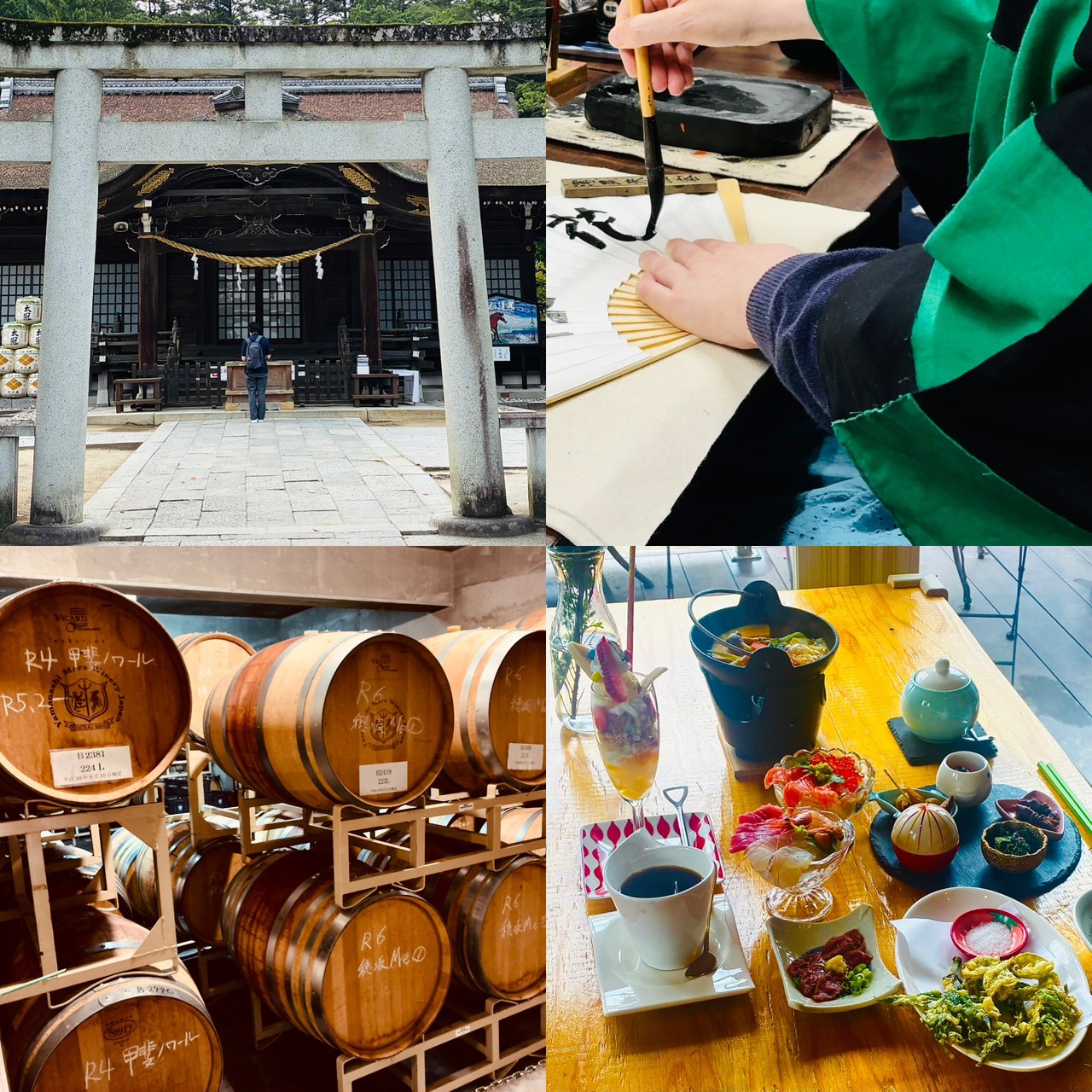
🖊 Traditional calligraphy experience
🍽️ Yamanashi regional cuisine
⛩Takeda Shrine visit & treasure hall tour
🍷 Local winery tour, shopping, and more…
💌 Have questions before bookings open? Feel free to reach out via our Contact page.
🌸 Please note: Cherry blossoms are seasonal, typically blooming from late March to early April. Outside of this period, the tour will focus on Yamanashi's timeless scenery, premium wineries, and cultural heritage.
★ About this tour ★
◆Sakura Savory Journey – Meeting Point Information 🚃 About Isawa-Onsen Station and Its Surroundings♨
Isawa-Onsen Station, originally named Isawa Station, received its current name in 1993. The station has two exits—North and South—and our tour meeting point is at the North Exit.The South Exit serves as the main access area, offering a variety of shops and facilities, including confectionery stores like Châteraisé, restaurants, and souvenir shops. On the west side of the station’s roundabout, you’ll find a free public footbath, a relaxing spot where visitors can enjoy a warm soak before or after exploring the town. A short walk from the station brings you to Isawa Onsen Village, home to numerous traditional inns and hot spring facilities. Compared to other historic hot spring towns in Japan, Isawa Onsen is relatively young—its history began in 1956. The hot spring water is a clear, odorless, alkaline spring known for its gentle and refreshing qualities. The area also features many Showa-era retro snack bars and small pubs, offering visitors a chance to experience authentic Japanese nightlife and local culture.
◆About Calligraphy 🖌
【History】
Calligraphy was introduced from China over 1600 years ago and has been an integral part of Japanese culture. Along with flower arrangement and tea ceremony, it is considered one of the traditional arts. Around 1500 years ago, during the Asuka period, Buddhism was introduced to Japan. Kanji characters were brought to Japan through Buddhist scriptures and temple arts. During the Heian period, the Japanese created their own unique hiragana characters alongside existing kanji. The development of hiragana gave rise to a new aesthetic in calligraphy. In the Sakura Savory Journey tour, we explore the artistic and cultural significance of calligraphy as it has been practiced throughout Japanese history. During the Edo period, when the common people began to learn to read and write, calligraphy became more widely accessible to ordinary citizens. During the Meiji Restoration, Japan adopted Western learning while also modernizing its own traditions; calligraphy was preserved as a classical art form and continues to be studied today as both a disciplinary practice and an artistic pursuit.
◆The Homeland of the Legendary Warlord, Takeda Shingen ⛩
Just 90 minutes from Tokyo lies Yamanashi Prefecture— a land once ruled by the famous warlord Takeda Shingen during Japan’s Warring States period over 500 years ago.
Shingen was supported by a loyal group of 24 commanders, known as the “Takeda Calvary." Each of them governed different regions of Yamanashi and contributed to the strength of the Takeda clan.
Shingen was a brilliant strategist, so formidable that he once defeated Tokugawa Ieyasu, who would later unify Japan. One of the most famous episodes in Japanese history is the Battle of Kawanakajima, where Shingen and his rival Uesugi Kenshin are said to have clashed six times.
Around the time of Japan’s unification, Shingen fell ill and passed away. It is said that the Takeda clan reportedly kept his death secret for three years by using a body double.
After his son Katsuyori succeeded him, some retainers defected to Oda Nobunaga, and the Takeda clan eventually declined.
Even today, Yamanashi is filled with stories, legends, and historical sites connected to the Takeda family. Knowing this history will make your Sakura Savory Journey experience richer and more immersive.
◆There's no place like this! Enjoy a wonderful local cuisine lunch 🍴
◆Characters of Yamanashi Wine 🍷
【Significance as a Wine Region】
Yamanashi Prefecture is the birthplace of and the nation's leading producer of Japanese wine. The region features approximately 80 wineries concentrated in the Kofu Basin. As an inland basin, it has significant temperature variations between day and night, making it ideal for grape cultivation. Additionally, Yamanashi is Japan's only designated wine industry promotion special zone.
【History】
Japanese wine production began through efforts initiated by Buddhist monk Yamada Hironori and sake brewer Takuma Norihisa. In 1877, the "Yamanashi Prefecture Wine Brewing Institute" was completed at the former Kofu Castle site, and Koshu wine received an award of honor at the 1878 Paris Exposition.
【Primary Grape Varieties】
The most commonly used wine grape variety is Koshu, which originates from Yamanashi, followed by Muscat Bailey A and Delaware. The Koshu grape is believed to have originated in the Caucasus region and arrived in Japan via the Silk Road, eventually establishing itself in the Katsunuma area of Yamanashi.
【Flavor Profile】
Japanese wines are generally characterized by delicate flavors and taste, making them particularly well-suited to Japanese cuisine such as sushi and sukiyaki. Koshu grapes express diverse aromas including white peach, quince, apple, mandarin orange, and grapefruit zest in their natural form.
【Regional Diversity】
The area encompassing Koshu City, Yamanashi City, and Fuefuki City is the birthplace of Japanese winemaking, with more than 70% of operating wineries concentrated there. This region is characterized by sloping terrain and complex deltas, creating diverse slope orientations and soil conditions.
.................................................................................................................................................................................
◆Since it can’t be taken abroad, savor it here in The Homeland of "Shingen Mochi," where its true flavor is at its best.
One of the most famous souvenirs from Yamanashi is the traditional sweet “Shingen Mochi.”As the name suggests, it is inspired by the legendary warlord Takeda Shingen who ruled Yamanashi during the Warring States period.
- Kikyouya (based in Fuefuki City)
- Kinseiken (based in Hokuto City)
These two companies were once involved in a long-running dispute over trademarks and product similarities— a conflict known as the “Shingen Mochi Lawsuit,” which lasted for more than ten years.
Eventually, the companies reached a settlement, and today:
- Kikyouya sells “Kikyou Shingen Mochi”
- Kinseiken sells “Shingen Mochi”
🍡🍡🍡
Although the names are similar, each version has its own unique characters. You can taste the difference in the aromas of roasted soybean flour, the sweetness of the black syrups, and the texture of the mochi.
Which one will become your favorite? During the Sakura Savory Journey, you can enjoy the food culture behind Yamanashi.
 Follow us on Instagram